Information security: what is it, 5 pillars and how to ensure it in companies?
Cybersecurity & Privacy / Date: 05-05-2025
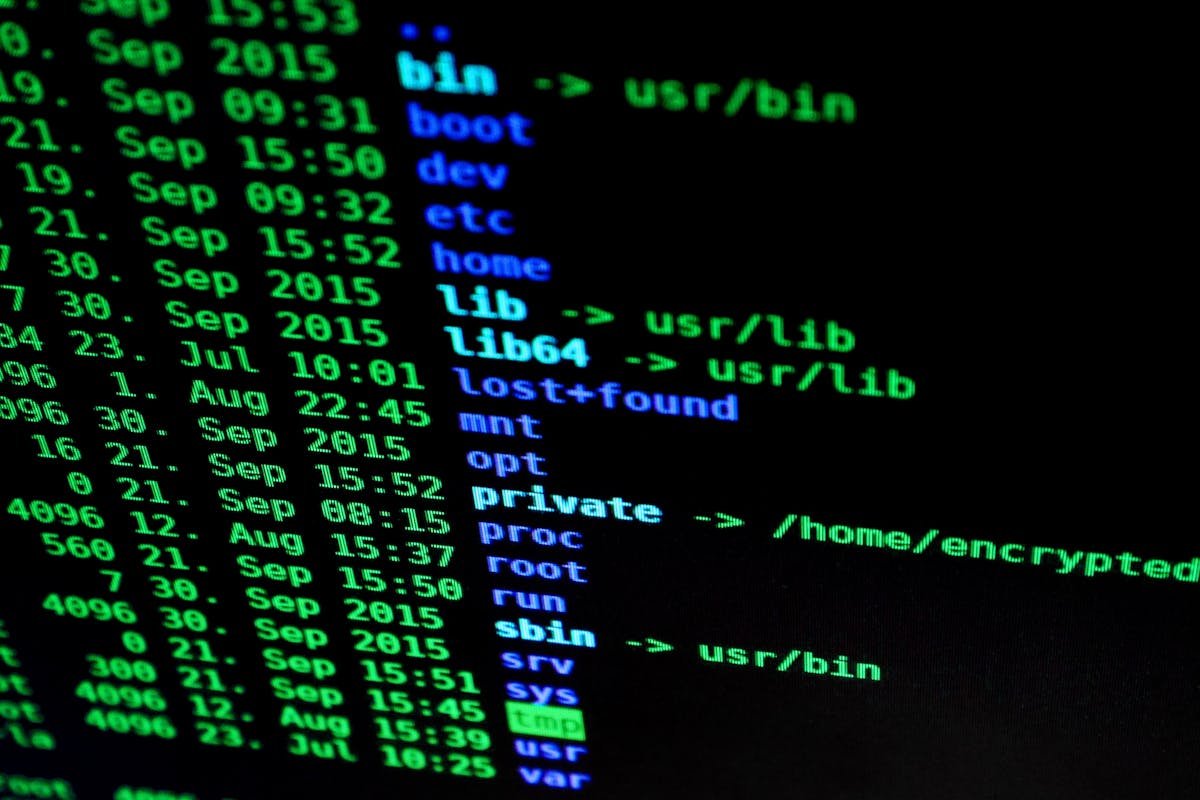
Information security is the protection of data owned by organizations against various threats.
This is an effort guided by actions that aim to mitigate risks and ensure the continuity of operations.
In fact, it is a very broad concept, but we can understand it more clearly by dividing it into two parts:
- Information : valuable content for a company or professional
- Security : the perception of protection from dangers, threats and uncertainties.
The objective of information security, therefore, is to guarantee the owner of that content the feeling that nothing bad will happen to it.
To this end, it relies on five pillars (which we will discuss later), and its actions are capable of increasing content protection, but without guaranteeing absolute security.
This means that even if the information is stored for restricted use, there will always be a risk.
It is up to professionals in the field, then, to work to ensure that it is as small as possible, using techniques, tactics and tools that are constantly updated – which works as a proportional response to existing advances in the actions promoted by cybercriminals.
It is also worth clarifying that the concept of information is as broad as possible, as it can include financial and banking data, data related to a project, service or intellectual property, among others, belonging to the company or in its possession.
5 pillars of information security

As information security procedures are improved, new principles are added to the concept .
Originally, however, there were five pillars that governed data protection actions in companies.
If you are wondering how we can interpret information security and its practical application, these pillars help to explain:
Confidentiality
The most important of the five pillars of information security management is confidentiality, after all, the main objective of professionals in the area is to preserve data confidentiality .
This means that certain information should not be accessed by people who are not accredited, nor disclosed by these people for obscure purposes.
It also deals with confidentiality guarantees when data travels on the internet or internally, through resources such as data encryption .
A simple example of the application of this pillar is when we access our email accounts and, to do so, we are required to provide a login and password.
Social networks also do this, some even offering extra features, such as two-factor authentication.
Availability
Restricting access to data or encrypting it while it is in transit cannot prevent those entitled to access the information when needed.
This is the principle of availability, according to which data must be accessible when accredited people need it most.
In this sense, companies responsible for keeping data secure must provide the means for it to be freely accessed.
This may involve the transfer or sale of hardware, software and connections that allow the use of data repositories.
In certain cases, additional resources may be required , such as electronic signatures , which are the sole responsibility of those who wish to access a certain database.
Integrity
It would make no sense to keep data confidential or encrypt it if, in the process, it were to be tampered with in some way .
It is therefore necessary to preserve the integrity of the information that is exchanged or accessed, so that its recipients or holders receive it in its entirety.
If we have access to a list with 100 names, that is the number of people that should be included in this registry, no more, no less.
In this way, integrity is, in a way, a premise of information security, whose application is only valid when the protected data is not corrupted or tampered with.
Authenticity
Large data repositories cannot be formed without sources that are equally secure and reliable .
Only in this way can respect for the pillar of authenticity be guaranteed, the focus of which is to guarantee the veracity of the source of information.
Whenever we access an email that is sent to us, we can know, in addition to the sender's address, data such as the time of sending and even the IP number.
This is what companies do when they keep records of the sources of the data collected in their data lakes and data warehouses.
This way, they ensure that the insights generated from this data will be reliable, as they come from information from reliable sources.
Irrevocability
The pillar of irrevocability is complementary to that of authenticity.
It guarantees that, if data comes from any source, its authorship cannot be contested under any circumstances.
This prevents, for example, fraudulent actions from being carried out and their authorship being contested due to alleged misuse of access data.
Of course, in certain cases, it is very difficult to identify who was the author of a criminal or offensive virtual action based solely on remotely identified user data.
The aim of this pillar is to increase confidence in information security processes to deter potential fraudsters.
It is also worth mentioning concepts related to the application of the pillars, which we will see below.
Concepts related to the application of pillars
- Vulnerability : weaknesses in protected content, with the potential to harm some of the pillars of information security, even if unintentional.
- Threat : external element that can take advantage of the existing vulnerability to attack sensitive business information
- Probability : refers to the chance of a vulnerability being exploited by a threat
- Impact : refers to the expected consequences if protected content is exposed in an unauthorized manner
- Risk : establishes the relationship between probability and impact, helping to determine where to focus investments in information security.
How to ensure information security in companies?
Keeping critical data safe from unauthorized people is not only a way of managing information security, but of complying with the law .
Therefore, companies are obliged to develop mechanisms and invest in infrastructure so that personal data collected in their operations is not leaked.
This is the case, for example, with banking data, which is always a target for opportunistic cybercriminals.
To this end, information security in companies can be guaranteed by two means: digital and physical, as we will see below.
Digital controls
Also called logical controls, they consist of digital accessibility measures, such as passwords, codes and other virtual shielding systems.
Some examples of this type of control are:
- Digital signature : typically used to validate digital documents
- Certification : type of digital “stamp” used to prove the authenticity of a document
- Hashing : digital mechanism for verifying files in order to ensure their integrity
- Encryption : a resource used to “scramble” the content of a message, making it difficult to intercept
- Access controls : traditional passwords, logins and resources such as biometrics, pins or access cards.
Regarding passwords, it is always important to remember that they must be complex enough so that they cannot be easily discovered.
They should preferably be single-use , that is, for each login or account to be accessed, a different password must be defined.
Physical monitoring
Logical control systems do not eliminate the need to, in some cases, also implement physical monitoring mechanisms.
See some examples below :
- Cameras
- Security agents
- Walls
- Doors
- Smoke and fire alarms
- Locks
- Safes.
These and other security features are also used to make it difficult for criminals to act or to prevent authorized persons from misusing their prerogatives .
They also serve as protection against bad weather and the action of external agents, especially in companies that have a more robust server infrastructure.
In addition to digital and physical controls, employee awareness and training play a vital role in maintaining information security. Even the most advanced systems can be compromised if employees are unaware of basic security practices. Regular training sessions on topics such as recognizing phishing attempts, safely handling sensitive data, and adhering to internal access protocols help build a security-conscious culture. When staff members understand their role in the broader security framework, they become the first line of defense against many common threats.
Moreover, companies should adopt a continuous monitoring and auditing approach to detect anomalies and ensure compliance with established security policies. This includes using tools that track system access, data transfers, and network activity in real time. Periodic security audits can uncover vulnerabilities before they are exploited, while compliance checks help ensure alignment with legal regulations.
Related News

Can Hackers Be Outthought by Machines? AI's Startling Ascent in Cybersecurity
In the battle between hackers and defenders, the stakes have never been higher. But here’s the kicker: machines may be the key to turning the tide in favor of cybersecurity. We’re all used to hearing about...
Read More
Cybersecurity in 2025: Top Threats and How to Protect Yourself
In this article, we’ll explore the top cybersecurity threats predicted for 2025 and the best strategies to keep your data and devices safe.
1. Top Cyber Threats in 2025: Cybersecurity
1.1 Ra... Read More
Follow Us
Newsletter
Subscribe to our newsletter to stay updated with our latest news and offers.
We respect your privacy.Trending